Chromosome Number: Homo erectus is believed to have had 48 chromosomes, similar to modern Great Apes.
Evolutionary Significance: The reduction in chromosome number from 48 to 46 in modern humans is attributed to the fusion of two ancestral chromosomes, forming what is now known as human chromosome 2.
Chromosome Fusion Event
Fusion Details: The fusion event that created human chromosome 2 likely occurred between 930,000 and 600,000 years ago.
Impact on Species: This chromosomal change allowed for interbreeding among Homo sapiens, Neanderthals, and Denisovans, all of which share the fused chromosome.
Ancestral Relationships
Common Ancestors: Homo erectus is a key ancestor to later human species, including Homo heidelbergensis, which is the last common ancestor of modern humans, Neanderthals, and Denisovans.
Genetic Bottleneck: A significant genetic bottleneck in early human history led to a loss of about 66% of early human genetic variation, coinciding with the time of the chromosome fusion.
Conclusion
Homo erectus had 48 chromosomes, and the evolutionary transition to modern humans involved a crucial chromosomal fusion that shaped the genetic landscape of subsequent hominin species.
A new study published in the Journal of Human Evolution has shown remarkable similarities between how modern chimpanzees and early human ancestors pick tools, giving us fresh insights into the evolution of tool use.
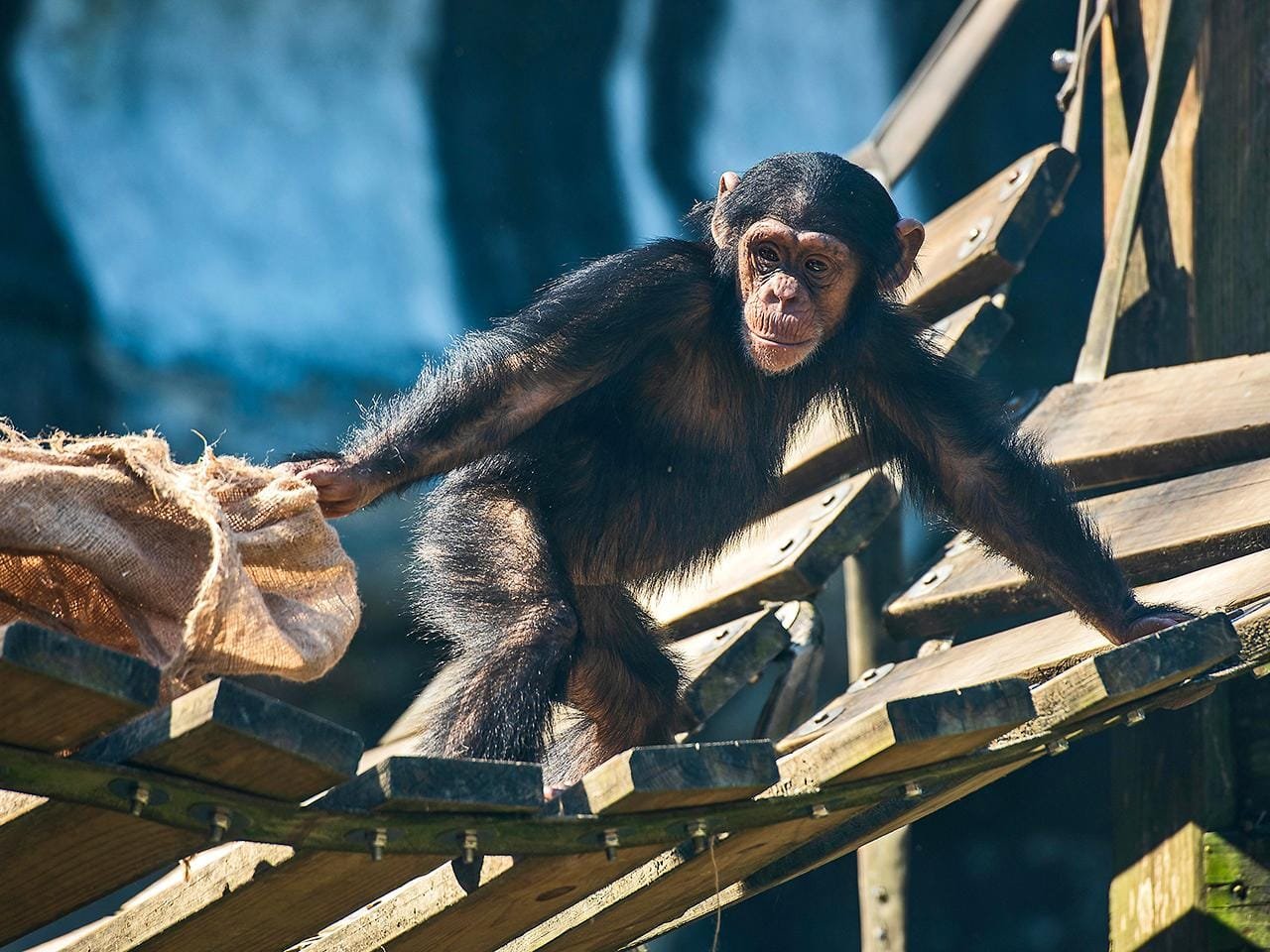
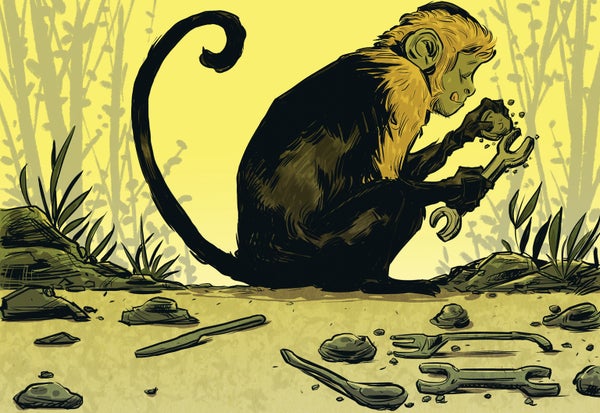
Credit: Klub Boks
An international team of paleobiologists, anthropologists, and behavioral scientists carried out this research. Their work shows that the way chimpanzees choose stones to crack nuts is very similar to the purposeful and practical approach used by Oldowan hominins over 2.5 million years ago.
Scientists watched chimps in Bossou, Guinea, crack nuts using two tools: a hammer to hit the nut and an anvil to hold it steady. The team gave the chimps stones of different hardness, bounce, weight, and shape to see how they chose their tools. The study showed that chimps always picked harder stones for hammers and softer, more stable ones for anvils. They made these choices based on mechanical properties of stones, not how they looked or felt. The way they selected them suggests that they must have had an understanding of their practical utility.
These discoveries resemble how Oldowan hominins used tools. They were some of the first we know about to use stone tools. People started using Oldowan tools about 2.5 million years ago to chop, cut, and scrape. Studies show these early human ancestors picked stones with specific useful features on purpose, getting better at choosing over time. Just like the chimps, they cared more about how well tools worked and their mechanical benefits than how they looked on the surface.
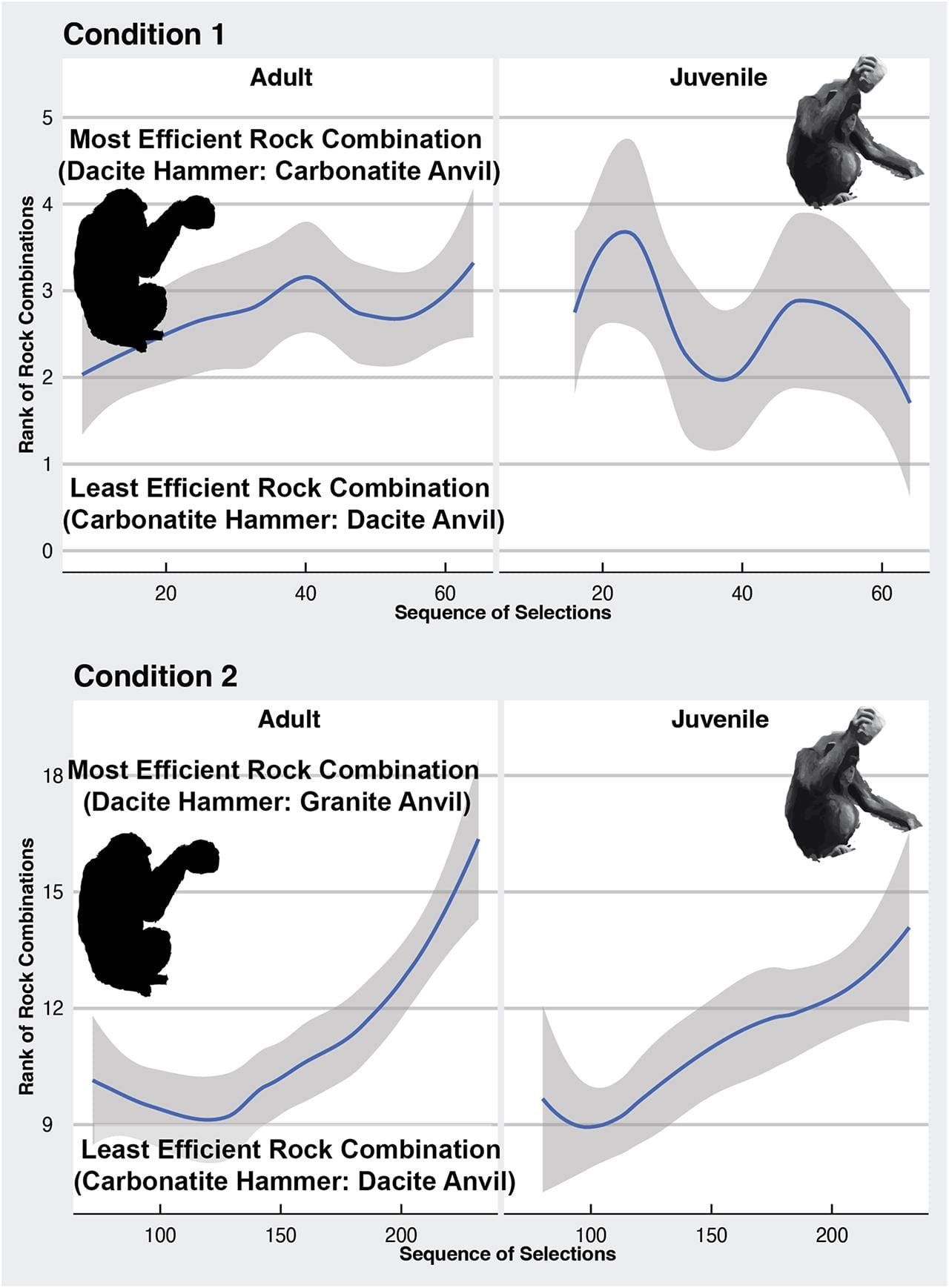
Plots of the average efficiency rank of rock combinations (hammer:anvil) through the course of the two portions of the experiment (Condition 1, Condition 2). The experiment is divided into a sequence of individual rock selections (defined as an instance where the hammer or anvil is changed) to investigate general patterns through the course of the experiment. Spearman’s rank correlation is conducted on the efficiency rank value through the sequence of selections. Credit: D. R. Braunet al., Journal of Human Evolution (2024)
Notably, Oldowan hominins moved stones long distances so they had a good understanding of material properties.
The study also reveals the social dynamics of tool use in chimpanzees. Younger chimps would mimic the tool choices of older, more experienced chimps, forming a type of cultural transmission. This is how early human societies passed down survival skills and tool-making techniques, which were essential for technological advancement and adaptation.
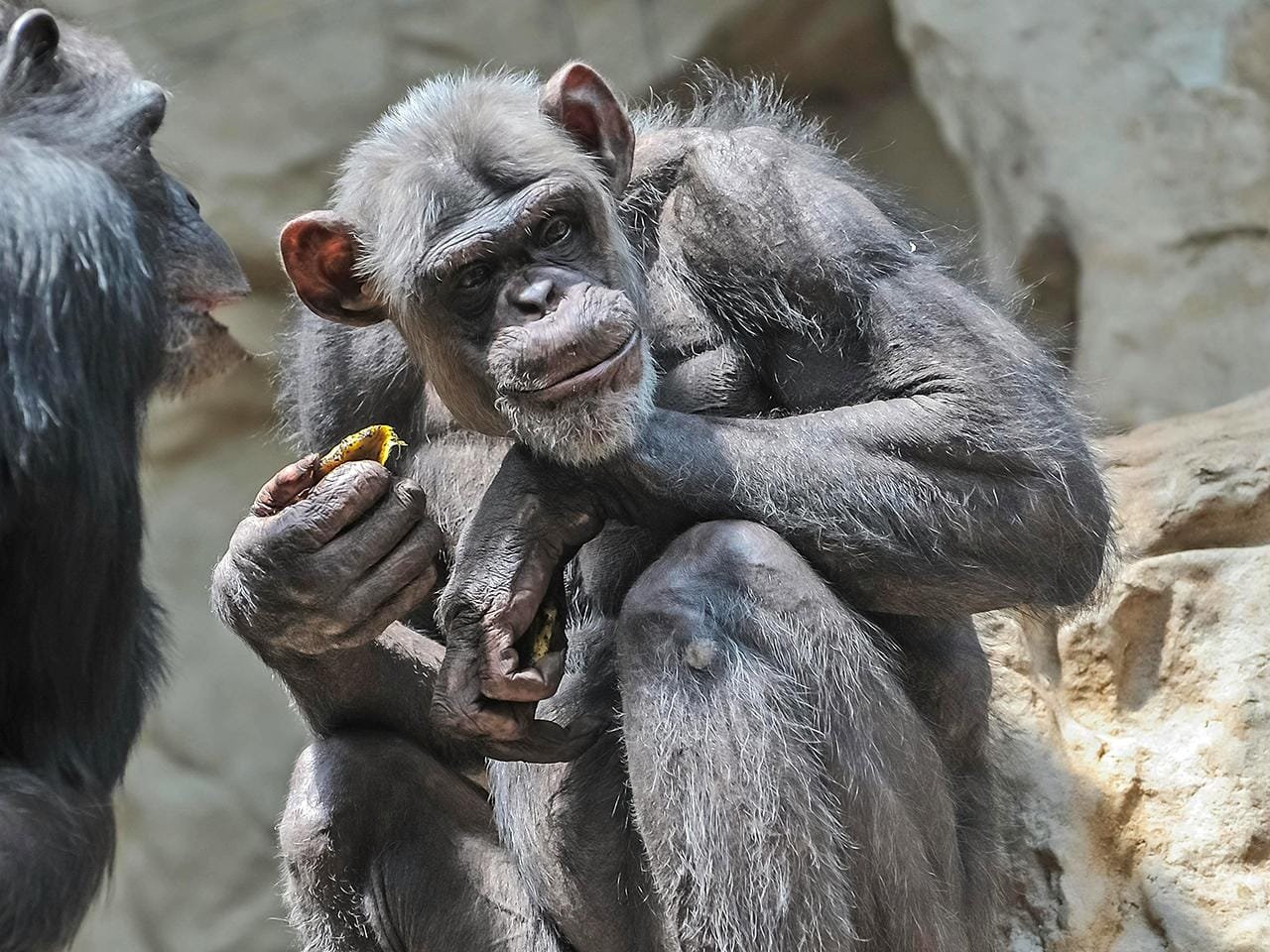
A new study has shown similarities between how modern chimpanzees and early human ancestors pick stone tools. Credit: Pavel Bak
The findings add to the expanding area of primate archaeology, which connects behavioral research on modern primates with the archaeological evidence of ancient hominins. By examining chimpanzees—our nearest living relatives who have about 98% of our DNA in common—researchers can guess at the social and environmental factors that shaped how early humans started to use tools.
More information: Braun, D. R., Carvalho, S., Kaplan, R. S., Beardmore-Herd, M., Plummer, T., Biro, D., & Matsuzawa, T. (2024). Stone selection by wild chimpanzees shares patterns with Oldowan hominins. Journal of Human Evolution, 199(103625), 103625. doi:10.1016/j.jhevol.2024.103625
A monkey picks up a potato-sized rock in his tiny hands, raises it above his head and smashes it down with all his might on another stone embedded in the ground. As the creature enthusiastically bashes away, over and over, flakes fly off the rock he is wielding. They are sharp enough to cut meat or plant material, but the monkey does not pay much attention to the flakes, save to place one on the embedded rock and attempt to smash it, too. Still, he has unintentionally produced artifacts that look for all the world like stone tools found at some human archaeological sites.
The monkey is a wild capuchin in northeastern Brazil's Serra da Capivara National Park, where these animals have long been known to use rocks for a wide range of activities, from cracking open nuts and digging for roots to catching the attention of potential mates. Other nonhuman primates, including West African chimpanzees, also use rocks as tools in the wild. But the Serra da Capivara capuchins are the only ones that scientists have seen banging rocks together to break them—an activity previously thought to be exclusive to members of the human family. Humans do it to create sharp-edged tools for cutting things. The capuchins, in contrast, have never been seen using the flakes they make; they just lick the surface of the embedded stone, perhaps in pursuit of mineral dust.
Capuchin artifacts resembling those made by humans (above) could necessitate reanalysis of other enigmatic stones. Of particular concern are those found at the archaeological sites of Pedra Furada in Brazil, located near the monkeys' home. To read more about the controversy, visit www.ScientificAmerican.com/monkey-tools. Source: From “Wild Monkeys Flake Stone Tools,” by Tomos Proffitt et al., in Nature, Vol. 539; November 3, 2016
Now a new study has examined the capuchin-produced stone flakes, and it turns out that the chips meet criteria used to distinguish human tools from naturally broken rocks. The findings, published in fall 2016 in Nature, could fuel debate over controversial archaeological sites. The discovery also raises questions about what differentiates humans from other primates and how our lineage started fashioning implements from stone.
Tomos Proffitt of the University of Oxford and a group of his colleagues watched the capuchins select rocks to use as hammers and subsequently strike them against cobbles. The researchers retrieved the fragmented stones and also collected other such artifacts found in excavations within the surrounding area—just as they would if they were excavating a human archaeological site. They then analyzed this collection of 111 capuchin artifacts, examining their shapes and sizes, as well as the nature of the scars left on the rocks by all the bashing.
Remarkably, the team found that the capuchin artifacts exhibit distinctive scoop-shaped, or “conchoidal,” flaking and sharp edges and that the monkeys often removed multiple flakes from a single rock—all hallmarks of man-made stone tools. (The authors note that stone fragments produced during chimpanzee nut cracking, in contrast, lack most of the diagnostic criteria, as do flakes produced by captive bonobos that have been taught to knap.)
Experts have previously linked such characteristics to the emergence of humanlike hands and coordination and to shifts in human cognition. But the fact that monkeys produced rocks with these same traits demands a different evolutionary explanation. And if modern-day monkeys modify rocks in this way, it is possible that extinct monkeys and apes did, too, leaving behind archaeological assemblages of their own. Archaeologists thus need to refine the criteria they use to identify stone tools intentionally produced by members of the human family, Proffitt and his colleagues argue.
“Many people are going to be disturbed that these tools can be made by capuchins,” says archaeologist Sonia Harmand of Stony Brook University, who was not involved in the new research. According to Harmand, the monkey artifacts would not look out of place at East African sites containing tools made by human ancestors in one of the earliest technological traditions: the Oldowan, which dates back to 2.6 million years ago at the site of Gona in Ethiopia. The capuchin flakes resemble the simplest examples of Oldowan technology. But other Oldowan stone tools exhibit considerably more sophistication and planning, she says. The monkey artifacts also diverge from the oldest known stone tools in the world: 3.3-million-year-old implements that Harmand and her team excavated from the site of Lomekwi in Kenya. The Lomekwi tools are far larger and are made of basalt and phonolite—rocks that are denser than the quartz and quartzite rocks the capuchins use.
Some experts wonder whether the capuchins' flakes could spark doubts that members of the human lineage made the oldest stone tools. Although researchers have attributed the tools to human ancestors, the sites lack diagnostic fossils to establish the connection. “We have no clue” who created the material at Lomekwi and Gona, says archaeologist Wil Roebroeks of Leiden University in the Netherlands. Hélène Roche of Paris West University Nanterre La Défense disagrees, writing in a commentary accompanying the Nature paper that the capuchin findings should not raise suspicions about who produced the early stone tools found in Africa. Archaeologists have studied hundreds of those sites, she notes—and many of them contain contextual clues, including cut-marked bones that show how tools were used, as well as fossils that indicate human ancestors made them.
Although the capuchin discovery demonstrates that nonhuman species can accidentally produce fragments of rock that look just like human-crafted cutting tools, that does not mean the man-made tools are not special, Harmand cautions. Even if human ancestors started creating flakes unintentionally like the capuchins do, there was something that made them realize they could put them to use and even make new tools to suit their purposes. Moreover, human technology evolved from the comparatively simple tools seen at Lomekwi and at Oldowan sites to hand axes with carefully shaped cutting edges a million years later and eventually to the elaborate machinery we have today. Why did technology fail to evolve to the same degree in chimps and monkeys? Harmand asks. Why did humans alone take it to such an extreme?
Proffitt is eager to determine how long capuchins have been using rocks this way. Other evidence demonstrates that they have been using the cobbles to crack open nuts for at least 600 years. And chimpanzee stone tools from the Ivory Coast in West Africa date back to 4,300 years ago. Beyond that, “we have no evidence of what ancient monkeys or great apes were doing,” Harmand observes—which leaves plenty of room for more surprises in the future.
A crushed and distorted skull discovered in central China nearly 35 years ago is now redefining our understanding of early human evolution in Asia. Scientists have digitally reconstructed the 1-million-year-old Yunxian 2 cranium and discovered that it likely belonged to a close relative of the mysterious Denisovans and was a member of a lineage called the Homo longi clade, which likely coexisted with the ancestors of modern humans.
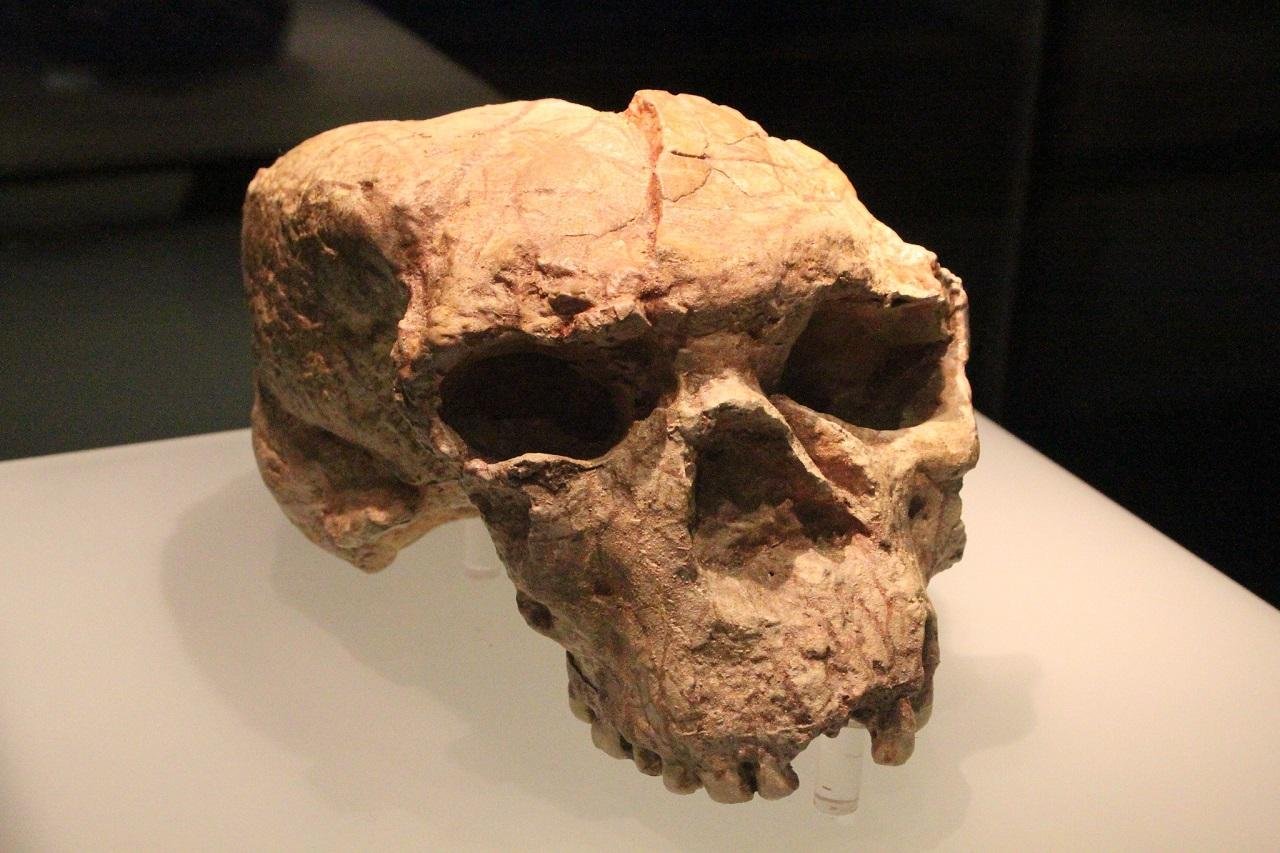
Yunxian 2 in the Hubei Provincial Museum. Credit: Gary Todd (Public Domain)
The skull was excavated in 1990 from a Hanjiang River terrace in Hubei province. It was originally thought to belong to Homo erectus, but modern analysis tells another story. High-resolution computed tomography (CT) scans and advanced 3D reconstruction techniques were used by scientists to reverse the warping caused by fossilization and damage over the course of millions of years. Yunxian 2 possessed a unique mixture of traits: a large braincase, thick brow ridges, a long, low skull, and a broad base reminiscent of earlier human species, yet it also displayed a flat face and other traits typical of later hominids.
These “mosaic” traits suggest that Yunxian 2 was a transitional form between Homo erectus and later groups. Morphometric and phylogenetic analyses position this skull in the longi clade, which likely includes the Denisovans, and as a sister group to Homo sapiens. Its existence implies that the lineages diverged far earlier than previously believed.
While earlier estimates placed the split between modern humans and Neanderthals around 500,000–700,000 years ago, Neanderthals are now observed to have diverged first, around 1.38 million years ago, followed by the separation of the longi and sapiens clades at around 1.32 million years ago. The distinctive features in the Homo longi lineage appeared at 1.2 million years ago, and early Homo sapiens traits emerged around 1.02 million years ago.
The significance of Yunxian 2 goes beyond its age. It falls close to the theoretical origin of both the longi and sapiens clades, potentially still possessing transitional features that illuminate how these groups diversified so rapidly in the Middle Pleistocene. Chinese fossil sites, along with those from the Philippines, South Africa, and northeast China, suggest that several hominid species of high morphological diversity coexisted during this period, raising controversy regarding whether or not they represent separate species or variations along the lineage leading to modern humans.
By combining new imaging and careful study of fragmentary fossils, researchers are now able to move the timeline of human evolution in Asia back by hundreds of thousands of years. Yunxian 2 not only tells us about the Denisovan lineage, but also highlights the complex, branching paths to the creation of Homo sapiens. The findings were published in the journal Science.
More information: Feng, X., Yin, Q., Gao, F., Lu, D., Fang, Q., Feng, Y., … Ni, X. (2025). The phylogenetic position of the Yunxian cranium elucidates the origin of Homo longi and the Denisovans. Science (New York, N.Y.), 389(6767), 1320–1324. doi:10.1126/science.ado9202
We’ve previously discussed the fact that Homo habilis is morphologically more similar to the australopithecines, probably belongs within the genus Australopithecus rather than Homo, and does not have the right morphological traits to serve as such an intermediate or “link” (see for example here, here, here, here, and here). Now a new study in Annals of New York Academy of Sciences, “Early humans and the balance of power: Homo habilis as prey,” has found evidence that seems to further confirm this view.
As for Homo habilis, Wood & Collard (1999a, 1999b, 2001) and Collard & Wood (2007, 2015) indeed advocated for transferring H. rudolfensis to the genus Australopithecus, which had already been suggested by other researchers (i.e., Walker 1976 and Lieberman et al. 1996). Walker & Shipman (1996) pointed out that “1470 might have a big braincase, but morphologically it was just an australopithecine.” A new digital reconstruction of the skull by Bromage et al. (2008) showed that it was somewhat less flat and the brain volume somewhat smaller, which made it even more similar to australopithecine skulls
===========================================
Here is the updated and sorted list of Homo species, including Homo denisova:
As of my last update in October 2023, there is no evidence to suggest that modern Homo sapiens carry detectable Homo erectus DNA. The genetic contributions from other archaic hominins, such as Neanderthals and Denisovans, have been well-documented in modern human genomes. However, Homo erectus is much older and more distantly related to modern humans, and its genetic material has not been detected in contemporary human populations.
Here are some key points regarding the genetic contributions from archaic hominins to modern humans:
Neanderthals: Modern humans outside of Africa carry about 1-4% Neanderthal DNA. This genetic material was introduced through interbreeding events that occurred when modern humans migrated out of Africa and encountered Neanderthals in Eurasia.
Denisovans: Modern humans, particularly those in Oceania and East Asia, carry Denisovan DNA, which makes up about 4-6% of their genomes. Denisovans are known to have interbred with modern humans in Asia.
Homo erectus: There is no detectable Homo erectus DNA in modern human genomes. Homo erectus is an older and more distantly related species, and any genetic material from Homo erectus would have been diluted or lost over the course of human evolution.
The lack of detectable Homo erectus DNA in modern humans is likely due to the significant genetic distance between Homo erectus and modern humans, as well as the passage of time, which has led to the dilution or loss of any genetic material from Homo erectus in the human gene pool.
==============================
As of my last update in October 2023, there is no direct evidence of Homo heidelbergensis DNA in modern Homo sapiens. Homo heidelbergensis is an extinct species of archaic humans that lived between approximately 700,000 and 200,000 years ago. This species is considered a common ancestor of both Neanderthals and modern humans, as well as Denisovans.
Here are some key points regarding the genetic contributions from Homo heidelbergensis to modern humans:
Common Ancestor: Homo heidelbergensis is believed to be the last common ancestor of modern humans, Neanderthals, and Denisovans. This means that the genetic material present in Homo heidelbergensis would have been passed down to these descendant species.
Neanderthal and Denisovan Contributions: Modern humans outside of Africa carry genetic material from Neanderthals and Denisovans, which are descendants of Homo heidelbergensis. Therefore, any genetic material from Homo heidelbergensis that is present in modern humans would have been passed down through these intermediary species.
No Direct Detection: There is no direct detection of Homo heidelbergensis DNA in modern human genomes. The genetic material from Homo heidelbergensis would have been diluted and modified through the generations as it passed down to Neanderthals, Denisovans, and eventually to modern humans.
In summary, while Homo heidelbergensis is an important ancestor in the human lineage, its genetic material is not directly detectable in modern human genomes. Instead, any genetic contributions from Homo heidelbergensis would have been passed down through its descendant species, Neanderthals and Denisovans, and are present in modern humans as a result of interbreeding with these archaic hominins.
===============================
Distinguishing traits between different Homo species help paleoanthropologists understand the evolutionary changes and adaptations that occurred over time. Here are some key distinguishing traits for Homo habilis, Homo rudolfensis, Homo erectus, and Homo heidelbergensis:
***Homo habilis (2.1-1.5 mya)
Brain Size: Relatively small brain size, around 640 cc.
Body Size: Similar to modern chimpanzees in size and build.
Dentition: Smaller teeth compared to earlier hominins like Australopithecus.
Tool Use: Associated with the earliest known stone tools (Oldowan industry).
Posture: Bipedal, but with some adaptations for climbing.
Skull: More rounded and less prognathic (less forward-projecting face) than earlier hominins.
***Homo rudolfensis (1.9 mya)
Brain Size: Larger brain size than Homo habilis, around 750 cc.
Body Size: Larger body size compared to Homo habilis.
Dentition: Larger teeth and a more robust jaw compared to Homo habilis.
Tool Use: Associated with Oldowan tools, similar to Homo habilis.
Posture: Bipedal, but with some adaptations for climbing.
Skull: More robust and heavier than Homo habilis, with a more pronounced brow ridge.
***Homo erectus (1.9-0.11 mya)
Brain Size: Larger brain size, around 850-1200 cc.
Body Size: Larger and more robust body size compared to earlier Homo species.
Dentition: Smaller teeth and a less robust jaw compared to Homo habilis and Homo rudolfensis.
Tool Use: Associated with more advanced stone tools (Acheulean industry), including hand axes and cleavers.
Posture: Fully bipedal with modern human-like posture and gait.
Skull: More elongated and less prognathic than earlier Homo species, with a prominent brow ridge and a more rounded brain case.
Adaptations: Adapted for long-distance running and endurance activities.
***Homo heidelbergensis (0.7-0.2 mya)
Brain Size: Larger brain size, around 1100-1400 cc.
Body Size: Large and robust body size, similar to modern humans but often more robust.
Dentition: Smaller teeth and a less robust jaw compared to earlier Homo species.
Tool Use: Associated with advanced stone tools (Acheulean and Middle Paleolithic industries), including hand axes, cleavers, and more complex tools.
Posture: Fully bipedal with modern human-like posture and gait.
Skull: More rounded and less prognathic than earlier Homo species, with a prominent brow ridge and a more vertical forehead.
Adaptations: Adapted for a wide range of environments, including cold climates, as evidenced by the presence of Homo heidelbergensis fossils in Europe and Africa.


Comments
Post a Comment